10 Stunning Home Config Ideas That Will Transform Your Space in 2026
 Ava Arnold
Your home is more than just four walls — it's a living, breathing reflection of who you are. In 2026, the way we configure our spaces has evolved into an art form, blending smart functionality with jaw-dropping aesthetics that are absolutely made for Pinterest boards. Whether you're rethinking a tiny studio or reimagining a sprawling open-plan living area, the right configuration can completely change how a space feels and flows.
From modular furniture arrangements to tech-integrated room configs that feel straight out of a design magazine, these ideas are the ones you'll want to save, pin, and revisit every time you're ready for a refresh. Let's dive into the most scroll-stopping home configuration trends making waves in 2026.
1. The Open Flow Config: Breaking Down Walls for a Seamless Living Experience
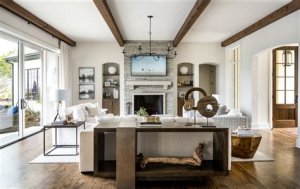
The open flow configuration has fully matured in 2026, moving far beyond the simple "knock-down-a-wall" approach of the past decade. Today, this layout is defined by intentional zones that feel distinct yet visually connected — a kitchen that breathes into a dining area, which naturally melts into a lounge. The vibe is airy, grown-up, and endlessly editorial, making it one of the most pinned interior layouts on Pinterest this year.
To achieve this look, designers are leaning into tonal color zoning — using varying shades of the same warm neutral palette (think sandy beige, warm taupe, and dusty linen) to delineate spaces without hard divisions. Furniture placement is key: a large, low-profile sectional sofa acts as a soft architectural divider, while open shelving units replace walls entirely. Materials like travertine, whitewashed oak, and brushed brass hardware tie the zones together cohesively.
Pro-Tip: Use a single large area rug per zone to visually anchor each functional area. This trick creates the sensation of separate rooms within one open config, without sacrificing that coveted open-plan freedom. Layer with pendant lighting at different heights to reinforce each zone's identity.
2. The Modular Config: Flexible Furniture Arrangements for Every Mood
If there's one configuration trend dominating 2026 Pinterest feeds, it's the modular furniture config. Born out of the post-pandemic need for adaptable living, modular configurations have exploded in popularity because they offer something no fixed layout can — complete freedom. Rearrange your sofa pieces before a dinner party, expand your shelving when your book collection grows, or reconfigure your workspace in minutes. It's interior design that evolves with your life.
The most sought-after modular systems in 2026 include brands like BROSA, Hem, and Moooi, which offer sectional sofas with interchangeable arms, ottomans that double as storage, and bookshelf systems with mix-and-match components. Color palettes for modular configs tend toward deep forest greens, terracotta, and charcoal — bold enough to make a statement, flexible enough to work in multiple arrangements. The key is investing in pieces with clean, geometric profiles so they look intentional no matter how you configure them.
Pro-Tip: When planning your modular config, photograph your space from above using your phone and sketch multiple arrangement options before committing. The best modular setups always have at least three viable configurations — a social layout, a focused work layout, and a cozy retreat layout. This saves you time and prevents furniture-rearrangement fatigue.
3. The Vertical Config: Maximizing Height in Small Spaces
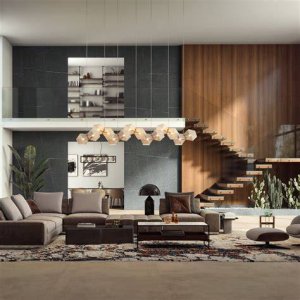
Urban living in 2026 means working with smaller square footage than ever, which is why the vertical configuration trend has become a Pinterest sensation. Instead of sprawling outward, this approach builds upward — stacking storage, mounting shelves to ceiling height, and drawing the eye up to create an illusion of grandeur in even the most compact apartments. The aesthetic is smart, editorial, and surprisingly luxurious when executed well.
The vertical config toolkit includes floor-to-ceiling built-ins, ladder shelves, wall-mounted desks, and loft beds with integrated storage underneath. Paint choices play a critical role here — designers in 2026 are using darker accent colors on vertical surfaces (like deep navy, forest green, or rich plum) to make walls feel intentional rather than oppressive. Floating furniture (pieces with legs rather than base panels) reinforces the airy, tall feeling of the room.
Pro-Tip: Mount your television higher than you normally would — at eye level when standing rather than sitting. This single change immediately trains the eye to travel upward, making the ceiling feel higher. Pair this with a tall, narrow floor lamp or a vertical art print to reinforce the upward visual journey.
4. The Biophilic Config: Nature-Integrated Room Layouts for Wellness
The biophilic configuration is 2026's most emotionally resonant interior trend, and it's absolutely everywhere on wellness and home decor Pinterest boards. This config isn't just about adding a few houseplants — it's a holistic approach to room layout that prioritizes natural light, organic materials, and living elements as core architectural features. The vibe is calm, restorative, and deeply connected to the natural world, evoking the feeling of a luxurious forest retreat right inside your home.
A true biophilic config involves strategic placement of furniture to maximize natural light access, with seating areas positioned directly near windows or skylights. Materials are entirely natural: raw linen, jute rugs, live-edge timber tables, stone countertops, and rattan pendant lights create a layered organic texture. Indoor trees (like the trending Monstera Albo or Fiddle Leaf Fig), moss walls, and water features serve as living design elements rather than afterthoughts.
Pro-Tip: When planning your biophilic config, identify your home's "golden hour zones" — the spots that receive the most warm, directional sunlight during the day. Build your primary seating and relaxation configurations around these zones first. Everything else — storage, circulation paths, accent pieces — should flow outward from these light-anchored focal points.
5. The Multipurpose Config: One Room, Infinite Possibilities
The multipurpose room configuration has gone from a compromise to a coveted design statement in 2026. As hybrid work remains the norm and homes need to accommodate more functions than ever before, this config type has been elevated by designers into something genuinely beautiful. The goal is a space that transitions effortlessly between work mode, rest mode, and social mode — without looking like a cluttered compromise of all three.
The signature elements of a Pinterest-worthy multipurpose config include murphy beds with integrated desk systems, room dividers that double as art installations, rolling kitchen islands that convert into dining tables, and hidden storage built into every possible surface. The 2026 color palette for these spaces leans into warm whites, soft greiges, and dusty mauves — tones that feel equally appropriate whether you're on a Zoom call or hosting a Saturday brunch. Smart lighting systems with programmable scenes are absolutely essential to shift the mood of the space instantly.
Pro-Tip: The secret to a beautiful multipurpose config is visual consistency. Every element — whether it's your work desk, your bed frame, or your dining chairs — should share the same design language (e.g., all curved forms, all matte finishes, all warm wood tones). When the "bones" of the config are visually unified, the room reads as intentional design rather than a space that couldn't make up its mind.
6. The Kitchen Triangle Config Reimagined: Efficiency Meets Aesthetic
The classic kitchen triangle (sink, stove, refrigerator) has been completely reimagined for 2026, giving way to the "kitchen zone config" — a layout philosophy that organizes the kitchen into dedicated activity zones rather than a triangle between three appliances. The result is a kitchen that's not just more efficient to cook in, but genuinely breathtaking to look at, with zones that almost feel like separate vignettes within one cohesive space.
The 2026 kitchen zone config typically includes a prep zone, a cooking zone, a beverage station, and a pantry zone — each with its own dedicated counter space, storage, and even its own lighting circuit. Materials trending for this config include fluted cabinetry fronts, unlacquered brass fixtures, handmade zellige tile backsplashes, and honed marble countertops. Color-wise, deep jewel-toned cabinetry (emerald, navy, cognac) paired with warm brass hardware is the definitive 2026 kitchen config aesthetic.
Pro-Tip: When configuring your kitchen zones, work backwards from your most frequent cooking habits. If you're a morning coffee ritualist, position your beverage station closest to the entry point of the kitchen so it's the first thing you interact with. Optimizing for your actual daily movements — not a generic "efficient triangle" — is the hallmark of a truly great kitchen config.
7. The Outdoor-Indoor Config: Blurring the Boundary Between Inside and Outside
In 2026, one of the most aggressively pinned home configurations is the indoor-outdoor config — a layout philosophy that intentionally dissolves the boundary between interior living space and exterior garden or terrace. This isn't just about sliding glass doors anymore; it's about creating a visual and material continuum between inside and outside that makes your entire home feel exponentially larger and more immersive. The vibe is effortlessly luxurious, vacation-home-worthy, and deeply aspirational.
Achieving this config requires floor material continuity — using the same large-format porcelain tile or polished concrete both indoors and outdoors so the floor becomes one uninterrupted surface. Furniture choices should be equally at home in both environments: teak, powder-coated aluminum, and all-weather wicker in outdoor tones (warm sand, slate blue, terracotta) that echo the interior palette. Folding or stacking glass wall systems are the architectural hero of this config, opening up to create a full-width aperture between spaces.
Pro-Tip: To make your indoor-outdoor config feel intentional rather than accidental, always install matching or complementary ceiling treatments on both sides of the transition. A timber-battened ceiling inside that transitions to a timber pergola outside creates an unbroken overhead narrative that visually stitches the two spaces together powerfully.
8. The Minimalist Config: Curated Intentionality Over Clutter
Minimalism in 2026 has shed its cold, sterile reputation and evolved into something far more warm, tactile, and intentionally human. The minimalist config trend dominating Pinterest this year is characterized by fewer pieces, each chosen with absolute precision — every object earns its place in the room and contributes both functionally and aesthetically. The vibe is meditative, confident, and quietly luxurious, like a boutique hotel room that somehow also feels like home.
The 2026 minimalist config palette is built on warm off-whites, raw plaster textures, and natural stone, with the occasional single bold accent piece (a sculptural lamp, an oversized ceramic vessel, or a single large artwork) that commands attention precisely because everything else is so intentionally quiet. Furniture profiles are low, wide, and architecturally simple — think Japanese-inspired platform beds, slab coffee tables, and built-in seating that becomes part of the wall itself.
Pro-Tip: The cardinal rule of a beautiful minimalist config is "one in, one out" — every time you introduce a new object to the space, remove another. But more importantly, before any object enters the room, ask yourself: does it serve a function AND bring genuine visual pleasure? If the answer to both isn't yes, it doesn't belong in the config.
9. The Smart Home Config: Technology Seamlessly Woven Into Design
In 2026, the smart home config has become sophisticated enough that technology is no longer a visible intrusion into beautiful interiors — it's invisibly woven into the fabric of the home itself. This configuration approach plans for technology infrastructure from the very beginning of the design process, ensuring that screens, speakers, sensors, and automation hubs enhance the space without visually cluttering it. The aesthetic result is a home that feels almost magically intuitive — lights that know when you walk in, blinds that follow the sun, and audio that fills exactly the right zones.
The key components of a 2026 smart home config include in-wall touch panels that mirror the wall finish, recessed ceiling speakers, hidden cable management systems, and motorized furniture (rising desks, retractable screens, automated kitchen shelving). Smart lighting systems like Lutron Caseta and Philips Hue are configured into scenes — "Morning," "Work," "Dinner," "Movie Night" — that transform the entire room's feel with a single voice command or app tap. Neutral, warm-toned devices designed to blend with interiors are now standard.
Pro-Tip: The most common mistake in smart home configs is retrofitting technology after the design is complete. Instead, map your technology zones during the planning phase — identify every wall where a panel might go, every ceiling where a speaker could sit, and every piece of furniture that might benefit from a hidden power outlet. Planning infrastructure early is the difference between a smart home that looks designed and one that looks wired.
10. The Grandmillennial Config: Bold Pattern and Layered Nostalgia
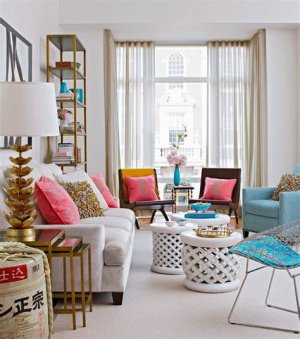
Perhaps the most delightfully unexpected configuration trend of 2026 is the resurgence of the grandmillennial config — a maximalist, deeply layered approach to room arrangement that draws unapologetically from traditional, vintage, and even grandmother-chic aesthetics. Think: floral wallpapers, chintz upholstery, gallery walls packed with mismatched frames, and rooms so layered with texture and pattern they feel like a warm hug. On Pinterest, this aesthetic has exploded precisely because it stands in such beautiful contrast to the clean lines and neutral tones that dominated the previous decade.
The grandmillennial config thrives on contrast and abundance. Pair a Victorian button-back sofa in a jewel-toned velvet with a Persian rug, a rattan side table, and walls covered in hand-painted botanical wallpaper. The color palette is rich and layered: emerald, dusty rose, ochre, midnight blue, and antique gold all coexist gloriously. Antique and vintage furniture sourced from estate sales, mixed with a few carefully chosen contemporary pieces, creates the signature tension that makes this config feel collected rather than decorated.
Pro-Tip: The secret to a grandmillennial config that reads as "curated" rather than "cluttered" is the rule of visual anchoring. Choose one dominant pattern (usually your largest piece — a wallpaper, an area rug, or an upholstered sofa) and ensure every other pattern in the room is subordinate to it in scale. Small florals, thin stripes, and subtle geometric accents can layer freely over one another as long as they don't compete with your hero pattern for dominance.
Final Thoughts
Whether you're drawn to the serene clarity of a minimalist config, the joyful abundance of a grandmillennial layout, or the cutting-edge intelligence of a smart home configuration, 2026 offers a richer, more diverse design landscape than ever before. The most important thing is to choose a configuration that genuinely serves your life — how you move through your home, how you work, how you rest, and how you entertain. The best config isn't the most expensive or the most on-trend; it's the one that makes you feel most at home every single day. Save your favorites, pin your inspirations, and start building the space you've always imagined.